Martin van Beynen’s article in The Press, "Save space just one church should cover it" about how Christchurch should rebuild its worship spaces will touch raw nerves for some, be quite acceptable to others and go quite un-noticed by many.
 |
| Christchurch's ruined cathederal |
But whether you agree with everything he says or not, and to be honest I don’t, his article does raise some serious questions. Questions like the what, how and where to rebuild these ruined citadels, assuming some or all of them are to be rebuilt; and perhaps more critically, What is their purpose? and, What is in a building?
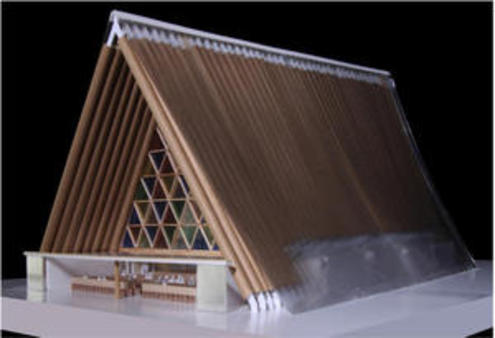 |
| One temporary cathederal option |
Assuming the insurances and EQC pay outs and other finances from their own money are in place, then why shouldn’t they rebuild what they want within the regulations on their own sites, even if it starts with a temporary cardboard cathedral, although like many I have reservations about such an option. The same rights as every other building owner in the city, the same rights as every other landmark that has been affected.
But the fact that such a right or ability exists isn't really the issue. I would agree that to the outsider who doesn't know the relevant community who meet there and why they do so, then many of these buildings can be rather cold and forboding. Therefore a setting that is more warm and inviting both on the outside and internally may well be the way to go. Many of these church buildings, as do other landmarks in the city, have a cultural and heritage value though that gives people ties to their roots, their ancesters and where they have come from. Whatever our cultural blend today they are a vital part of our identity as to who we are now. Just because they represent someone elses past more accurately than our own doesn't mean we should ignore or reject it.
The fact that each of the Christian communities that met in these buildings still function in some shape or form, even without their original meeting place brings me to what I think are the key questions though, "What is in a building?" and "What is it's purpose?" Until such queastions are addressed then issues such as what the buildings look like, where they are located and how they are financed are somewhat less important.
Many of todays church buildings are often single purpose places that remain unused through the week, but that was not, and need not be, always the case. Just like those Christian communities meeting in school halls and other such places, many church buildings of the past were very much central in the community and not purely from a faith perspective either. In the past, and certainly in Europe, the Sunday church building was often the weekday market, the place of social gathering and the local community centre all roled into one.
As for sharing a building with other Christian groups today, this does happen elsewhere. So while it might not be easy to start with there is no reason why in some cases it could not happen.So what is in a building? And in particular a church building at that. I think that it is a place where a community of people have a desire to meet and share life together. Not just a place for those who want to worship on a Sunday but a place that serves a purpose on most if not all days of the week. A place that is warm and inviting, where people can meet together for whatever purpose and enjoy relationships with one another. A place that therefore honours God not because of what it is but because of the people who meet there and so make it what it should be, a vibrant life giving centre of the comunity.

